

When you’re looking for ways to reduce costs on a commercial project, parking lot striping can seem like an easy place to cut corners. Buy some paint, measure the spaces, put lines on the pavement, and move on to the next task.
Unfortunately, commercial parking lot striping is rarely that simple.
A parking lot is one of the first things customers, tenants, inspectors, and project owners see when arriving at a property. Crooked lines, uneven spacing, faded markings, and poorly placed symbols can make an otherwise high-quality project look unfinished. Worse, mistakes in the layout or application can lead to costly rework that eats into your budget and timeline.
When commercial bids and tight profit margins are on the line, DIY parking lot striping can quickly cost more than hiring a professional from the start.
Why Commercial Parking Lot Striping Requires More Than Just Painting Lines
Commercial pavement markings help organize an entire property. They define where vehicles park, guide traffic flow through the lot, identify pedestrian areas, and communicate important information to drivers.
Depending on the project, pavement markings may include:
- Standard and oversized parking stalls
- Accessible parking spaces and access aisles
- Directional arrows
- Stop bars and other traffic markings
- Crosswalks
- Fire lanes
- Loading or designated parking areas
- Custom symbols and lettering
Each marking needs to work as part of the larger site layout. A parking stall can be painted perfectly straight and still create problems if it is improperly spaced, poorly aligned with surrounding rows, or positioned in a way that disrupts traffic flow.
That’s why the most important part of commercial parking lot striping often happens before the paint ever touches the pavement.
Professional pavement marking begins with understanding the project requirements and planning how every parking stall, directional marking, and symbol will work together. For new construction, this often looks like reviewing blueprints and specifications. For existing properties, it may mean evaluating the current layout and determining how markings should be restored, reorganized, or updated.
The goal is not just to put visible lines on the ground; it’s to create a functional, organized layout that supports the entire property.
Why DIY Parking Lot Striping Can Hurt Commercial Projects
For general contractors and commercial builders, the finished appearance of a project matters.
Your crew may have done excellent work throughout the construction process, but a poorly striped parking lot can still leave the wrong final impression. Pavement markings are often one of the last visible details completed before a project is turned over, making them a large part of the finished product clients and employees see every day.
DIY striping can introduce problems that are easy to overlook during the application process:
| Striping Problem | Potential Impact |
|---|---|
| Crooked or wandering lines | Makes the finished product look rushed or unprofessional |
| Uneven parking stall spacing | Reduces usability and creates layout problems |
| Inconsistent line widths | Creates a visibly poor finish |
| Poorly placed arrows or symbols | Confuses drivers and pedestrians |
| Fuzzy edges or overspray | Requires additional cleanup or repainting |
| Incorrect markings | Results in rework, delays, or added costs |
Small mistakes can add up across a large parking lot. A measurement that is slightly off at the beginning of a row may continue through the rest of the layout, creating inconsistent parking spaces that are difficult to correct once the work is complete.
Trying to eyeball measurements or paint directly over faded markings can cause unnecessary guesswork. A professional crew plans the layout before application, helping ensure markings are properly measured, consistently aligned, and coordinated with entrances, curbs, sidewalks, and other site features.
When you’re responsible for delivering a polished commercial project, parking lot striping should support the quality of your work—not become the detail everyone notices for the wrong reasons.

DIY vs. Professional Parking Lot Striping: Tools & Materials Matter
Having paint does not automatically mean you have the right material—or the right equipment—for the project.
Commercial pavement marking applications can vary based on the pavement surface, expected traffic, project specifications, desired longevity, and budget. Streetwise works with multiple different pavement marking materials, including standard waterborne paint, thermoplastic, epoxy, MMA, temporary markings, and pre-formed markings.
The Right Materials Depend on the Project
A DIY approach often starts with a simple question: What paint can we buy and apply ourselves?
Professional pavement marking starts with a better question: What material is right for this application?
The materials selected can depend on:
- Whether markings are temporary or intended for long-term use
- The type and condition of the pavement surface
- Expected vehicle traffic and wear
- Project specifications
- Budget and performance requirements
Choosing the wrong material can result in markings that wear prematurely and need to be replaced sooner than expected. A professional pavement marking provider can evaluate the needs of the project and select an appropriate material rather than relying on a one-size-fits-all solution.
Professional Striping Equipment Produces Consistent Results
Commercial striping also requires more than a steady hand.
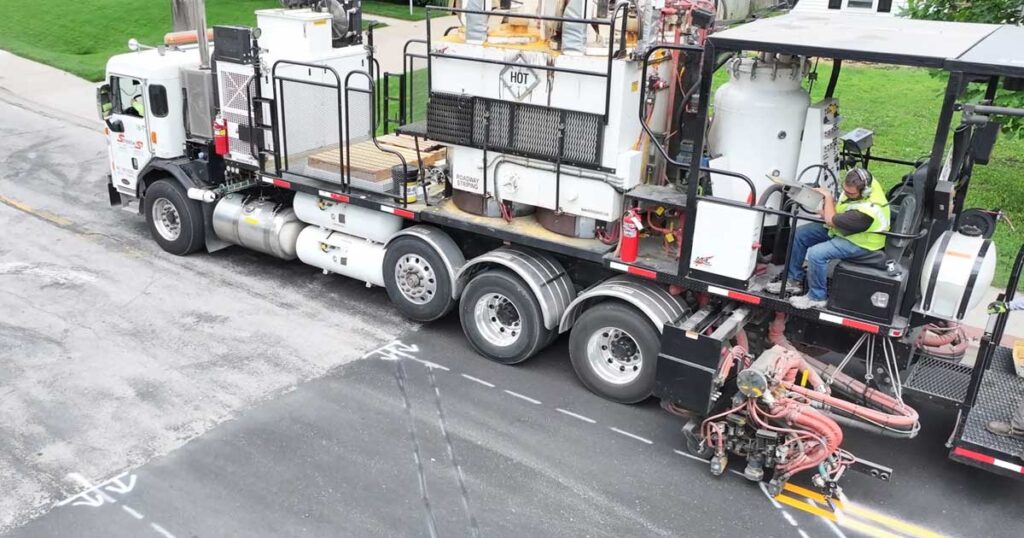
Specialized pavement marking equipment helps create clean edges, consistent line widths, and uniform application across the entire project. Without the right tools and experience, DIY crews may struggle with uneven application, inconsistent paint thickness, overspray, irregular lines, and poorly defined edges.
One decent-looking parking space is not the goal. A commercial project needs consistent results from one end of the lot to the other.
Incorrect Parking Lot Striping Can Lead to Costly Rework
DIY striping is often chosen because it appears to save money. However, those initial savings can disappear quickly when mistakes have to be corrected by a professional regardless.
Imagine a crew completes an entire section of a parking lot and later discovers the spacing is incorrect, the layout does not match project requirements, or the finished lines need to be removed and reapplied.
Now, the project may face:
- Additional labor hours
- More paint and materials
- Equipment costs
- Removal or correction of incorrect markings
- Cleanup
- Schedule delays
Oftentimes, the biggest cost associated with DIY Striping isn’t the first attempt; it’s the second.
For contractors working with competitive commercial bids, repeat work or professional pavement marking removal can quickly stretch already-tight budgets. A task done in-house just to save money can become an unexpected expense that was never included in the original estimate.
Project timing can also be an issue. Parking lot striping is often completed near the end of construction, when crews are working toward turnover, and every remaining task affects the final schedule. Needing to correct or redo markings can add more delays when the project is supposed to be wrapping up.
Professional pavement marking helps reduce those risks by approaching the layout and application process correctly from the beginning.
Parking Lot Striping Requirements Leave Little Room for Guesswork
Commercial parking lots often have very specific project specs, accessibility, traffic control, or owner requirements that need to be incorporated into the final layout.
Accessibility-related parking spaces and access aisles must be accounted for in the site plan. Project specifications may also set requirements for where other pavement markings go, how large they should be, which materials to use, and how they should look.
Commercial projects may also require specialized markings for:
- Loading zones
- Reserved parking
- Fire lanes
- Directional traffic flow
- Pedestrian areas
- Other designated site needs
Simply copying the markings from another parking lot or painting over an existing layout doesn’t guarantee the finished project will meet the needs of the current site.
Any custom symbols and specialized markings should also be incorporated into the layout before any painting begins—not added as an afterthought once the rest of the lot is painted. Professional planning helps ensure every required element works together as part of a cohesive finished layout.
What Professional Parking Lot Striping Includes
Professional parking lot striping means more than sending a crew out with paint and equipment. The right pavement marking company can handle the details that turn a parking lot from a blank surface into a functional, organized space.
At Streetwise, professional parking lot striping includes:
- Reviewing the site and project plans: Our team evaluates the parking lot layout, project specifications, and required markings before work begins.
- Creating or reorganizing the parking lot layout: Streetwise can perform the initial layout from scratch or redesign existing parking areas, mapping parking stalls, traffic flow, and required symbols before application.
- Precisely laying out parking stalls: Each row and stall is measured and aligned to create consistent spacing and a clean, organized appearance.
- Adding parking lot markings: Beyond standard stall lines, this can include directional arrows, crosswalks, accessible parking areas, fire lanes, lettering, and other required markings.
- Applying the appropriate striping material: Streetwise selects from multiple pavement marking materials based on the project’s needs, performance requirements, and budget.
- Using professional equipment for consistent application: Specialized equipment helps produce crisp edges, uniform line widths, and a consistent finish throughout the parking lot.
The difference is in the details. Professional parking lot striping treats the lot as a complete layout—not a collection of individual lines—and ensures the final markings work together from the first parking stall to the last.
Partner with Streetwise for Professional Parking Lot Striping
DIY parking lot striping may seem like a simple way to reduce upfront project costs, but commercial pavement marking leaves little room for trial and error. Poor layout, inconsistent lines, incorrect materials, and improperly placed markings can lead to costly repeat work, schedule delays, and a finished project that doesn’t reflect the quality of the work behind it.
When you’re managing a commercial project, every detail matters. Professional parking lot striping helps you avoid unnecessary guesswork and gives your parking lot the clean, precise finish your client expects.
Instead of adding another task to your crew’s workload, let Streetwise handle the planning, layout, material selection, and professional application.
Contact Streetwise today to request a quote and discuss your upcoming commercial parking lot striping project.