
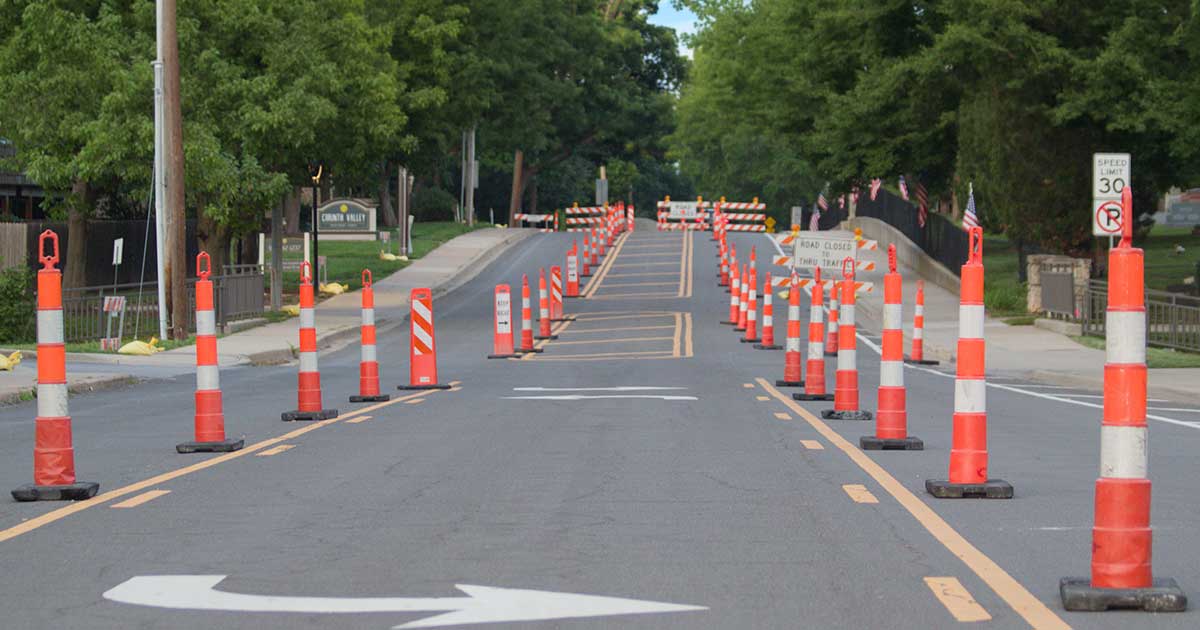
Road and utility work can bring traffic to a standstill, but a full road closure isn’t always the best or only option.
Crews may need to repair utilities beneath a busy street, or take up one lane of a two-lane road. Or maybe an excavation needs to stay open for several days, but the road still needs to handle traffic when crews leave for the night.
In situations like these, the question becomes: How do you get the work done without completely shutting down the road?
There isn’t one piece of equipment that magically solves the problem. Keeping traffic moving takes the right traffic control plan and the right combination of traffic control devices. Lane shifts, signs, message boards, temporary traffic signals, and steel street plates can all play a role depending on what the project needs.
Here’s a closer look at real-world traffic control solutions that can help keep roads open and traffic moving during construction.
How to Plan Construction Traffic Control Before Work Begins
The best way to keep traffic moving is to start planning long before the first traffic cone reaches the jobsite.
Start with the job itself. How much of the roadway will the work take up? How long will crews be there? Can traffic safely stay open in both directions, or does one lane need to be closed? Will the traffic pattern change as the project moves through different phases?
The answers to these questions help determine how traffic should move through or around the work zone.
A busy commercial street, for example, may need a very different setup than a short utility repair on a low-traffic road. Some projects can use lane shifts to keep vehicles moving. Others may need alternating traffic, temporary signals, or a detour.
Planning also needs to look beyond vehicles. Before setting up the work zone, consider:
- Business entrances and delivery access
- Residential driveways
- Sidewalks and crosswalks
- Pedestrian routes
- Changing traffic patterns throughout the project
The goal is simple: give drivers a clear, predictable path around the work zone while keeping workers protected. The right traffic control plan helps make that possible before the project creates a bottleneck.
Traffic Control Devices That Help Guide Drivers Around Work Zones
Once the traffic pattern has been established, the right devices help communicate that pattern to approaching drivers.
Different traffic control devices do different jobs. Some create physical boundaries around the work area, while others warn drivers about what’s coming and where they need to go. On many projects, you’ll need some combination of both.
Channelize Traffic & Define the Work Zone
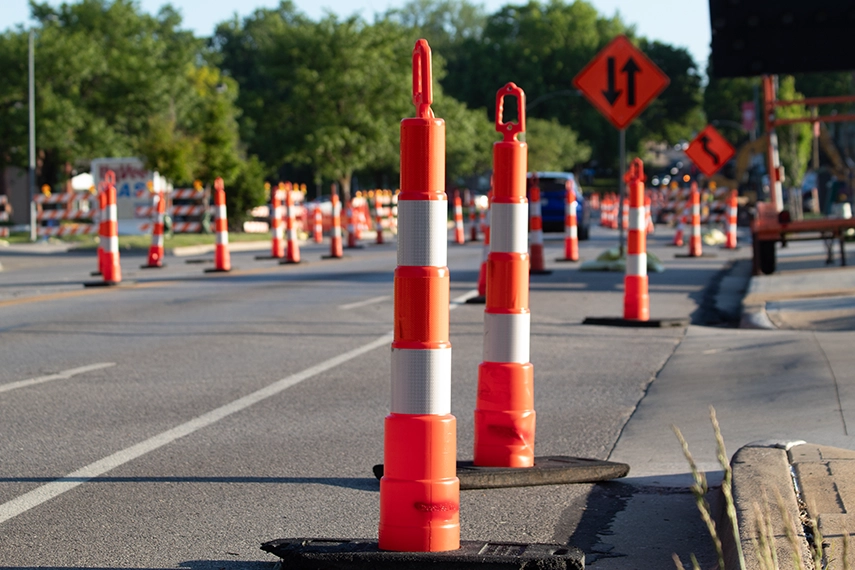
Traffic cones, drums, channelizers, and barricades help establish a clear separation between moving vehicles and the construction area.
Depending on the project, these devices can mark a lane closure, guide traffic through a lane shift, or define the edge of the usable roadway. They also help create a clear path for drivers as they approach and move through the work zone.
This is especially important when the normal traffic pattern changes. If construction moves vehicles into a different lane or narrows the available roadway, drivers need to understand exactly where traffic should travel. Properly placed channelizing devices help guide that movement and reduce confusion near workers and equipment.
Give Drivers Advance Warning & Clear Direction
Drivers also need enough information to react before they reach the work zone.
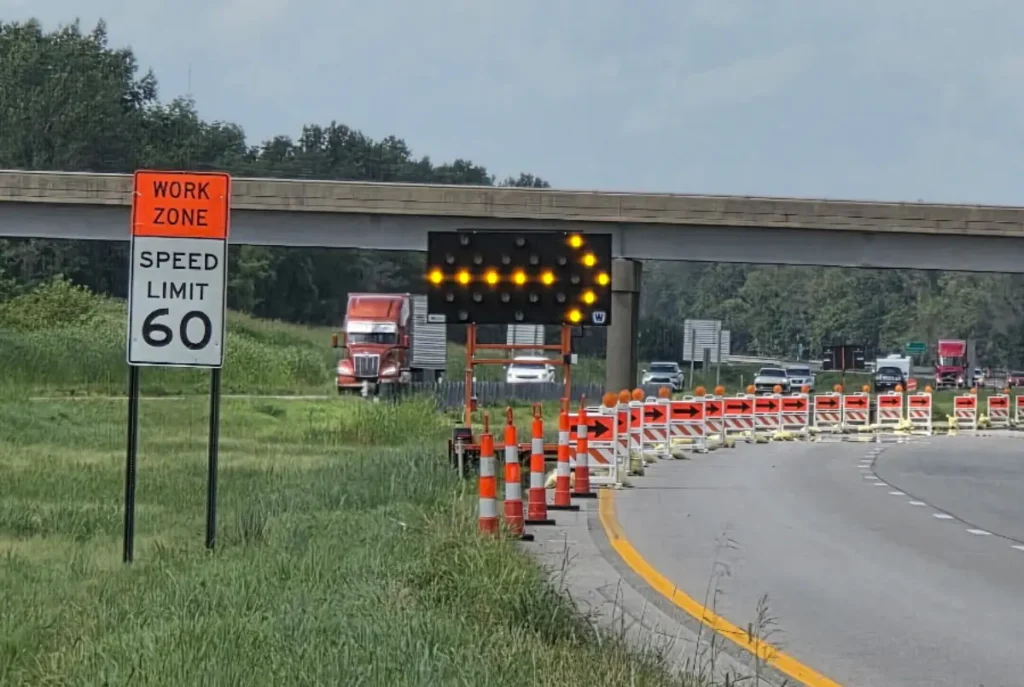
Construction signs, warning signs, arrow boards, and portable message boards can alert motorists to changing conditions ahead. Depending on the project, these devices may provide advance notice of a lane closure, direct drivers to merge, indicate a lane shift, or communicate information about a detour.
Together, they help answer the questions drivers need to understand before entering the work zone:
- What is changing ahead?
- Which lane is affected?
- Where should traffic move?
- Is a merge required?
- Is there a closure or detour ahead?
Advance warning gives motorists time to adjust to changing conditions. This is particularly important on busy or higher-speed roadways, where sudden braking and last-minute lane changes can quickly disrupt traffic flow.
How to Keep Traffic Moving When Construction Reduces Road Space
Sometimes the biggest challenge is simple: there just isn’t enough road left.
Construction may take over one lane, or an excavation may cut directly across part of the road. In those situations, the right temporary solution can help preserve access instead of closing down the road completely.
| When Construction Creates This Problem | A Potential Solution |
|---|---|
| One open lane must handle both directions | Portable temporary traffic signals |
| An excavation interrupts a travel path | Steel street plates when appropriate |
If only one lane remains open, portable temporary traffic signals can manage alternating traffic. One direction moves through the work zone while the other waits, then the cycle switches. This creates an organized flow through the remaining lane instead of leaving drivers to figure out who goes first.
Steel street plates can help solve a different problem. Utility work may leave an excavation open after crews finish for the day or while permanent repairs are pending. When appropriate for the application, properly selected and installed steel plates can temporarily cover the opening and help restore vehicle access.
These aren’t one-size-fits-all solutions. The site, excavation, expected traffic, and project requirements all matter. But when conditions allow, they can help contractors keep part of the roadway usable instead of shutting it down entirely.
Maintaining Access to Businesses, Homes, and Pedestrian Routes During Construction
Keeping cars moving is important, but it’s not the only access issue a construction project can create.
A road might technically remain open, but customers might struggle to reach a business. Residents may have trouble getting into their driveways. Deliveries still need somewhere to go, and pedestrians need a safe route around the work area.
That’s why traffic control planning needs to consider:
- Commercial entrances
- Residential driveways
- Delivery routes
- Sidewalks and crosswalks
- Temporary pedestrian routes
- Accessible paths around the work zone
For businesses, losing entrance access can mean lost revenue and disrupted deliveries. For residents, blocked driveways can quickly become a daily frustration. Pedestrian access requires the same consideration, particularly when construction affects sidewalks or other ADA requirements like curb ramps.
It’s important to address these concerns during the planning phase, rather than after the work zone is already in place. Depending on the project, solutions may include temporary traffic and pedestrian detours, accessible pathways, advance signage, or other site-specific measures.
Keeping a road open during construction only helps the community if people can still safely reach the places they need to go.
Choosing the Right Traffic Control Solution for Your Project
No two projects are exactly alike. The right traffic control solution depends on what the work is doing to the road.
A short repair may only need signs and channelizing devices. A longer utility project could require changing traffic patterns, temporary signals, message boards, and a way to maintain access around an excavation.
Here’s how common challenges can match up with potential solutions:
| Construction Challenge | Potential Traffic Control Solution |
|---|---|
| Work occupies part of the road | Channelizing devices and lane shifts |
| Drivers need advance warning | Signs, arrow boards, and message boards |
| One lane serves both directions | Portable temporary traffic signals |
| Excavation affects temporary road access | Steel street plates when appropriate |
| Traffic patterns change during construction | Site-specific traffic control planning |
| Business or pedestrian access is impacted | Access routing and temporary pathways |
The key is matching the solution to the actual job—not trying to force the same setup onto every project. Traffic volume, road layout, available space, project length, and changing work conditions can all influence what traffic control devices will make the most sense.
Keep Your Construction Project Moving with Streetwise
Keeping a road open during construction takes more than setting out a few cones and hoping for the best. You need a plan for how traffic will move, clear communication for drivers, and the right equipment to handle the challenges the work zone creates.
Streetwise Inc. helps contractors find practical traffic control solutions for road and utility projects. From traffic control planning and signs to channelizing devices and arrow boards, we can help you put together the right setup for your next project.
Whether you’re shifting traffic around a work zone, managing alternating one-way traffic, or trying to maintain access around an excavation, Streetwise can help keep your project moving without losing sight of safety.
Contact Streetwise today to discuss your upcoming project and find the right traffic control solutions to keep roads open and traffic moving safely.